Hey everyone,
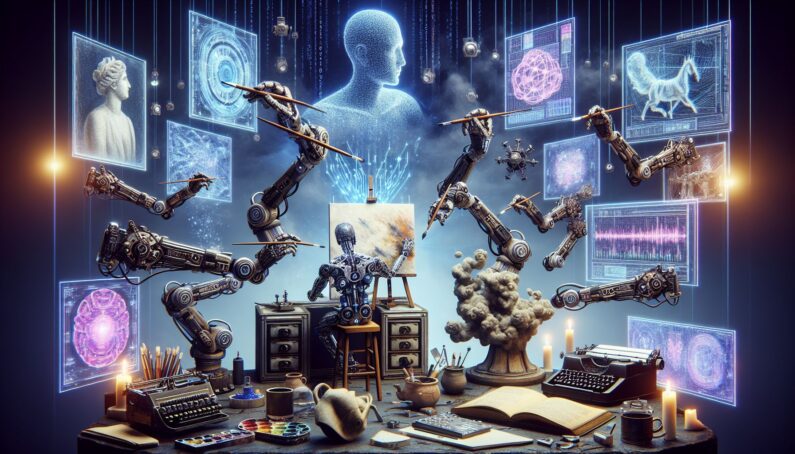
Today I wanna chat about one of my favorite tech subjects: Artificial Intelligence in creative arts. That’s right, AI isn’t just for your self-driving cars or spam filters anymore. It’s stepping onto the stage, taking a bow, and collaborating with artists to change the very nature of creativity. Seriously, we’re living in an age where AI’s potential in creative work is both mind-blowing and slightly nerve-wracking. But let’s get into it, shall we?
A Brush with the Future: AI’s Artistic Prowess
If you’d told me five years ago that AI would be creating art galleries of its own, I might’ve raised an eyebrow or two. Yet here we are. AI’s leaping into the world of visual arts with algorithms that can analyze thousands of paintings in milliseconds and produce unique masterpieces. We’re not just talking about digital art; I mean genuinely original creations that challenge what we consider as human-only domains.
Take the AI program developed by OpenAI, or even Google’s DeepDream. These platforms churn out works that sometimes feel like Van Gogh got tossed into a blender with Salvador Dali. The colors, the perspectives — it’s all very Alice in Wonderland meets The Matrix. And sure, some of it is just digital spaghetti, but there are gems that make you stop and think.
AI-Powered Musicians: Jamming with Algorithmic Composers
Ever heard a song composed by an AI? No? Well, prepare for an ear-opening experience. From pop ballads to complex symphonies, AI is rapidly becoming an important band member in the music industry. We’re talking about programs like AIVA (Artificial Intelligence Virtual Artist), which not only composes emotional pieces that tug at your heartstrings but also adapts and learns from human feedback.
For a real twist, AI-generated compositions aren’t just novelty items anymore. Big-name artists and producers are using AI to explore new soundscapes. Like, picture a collaboration between, say, Beethoven’s ghost and Skrillex. It’s kinda like that. The genre-defying results are occasionally unsettling but invariably intriguing. And maybe that’s the beauty of it: AI isn’t replacing musicians; it’s offering them a way to innovate like never before.
The Professional Creative’s AI Toolbox
But it’s not just about what AI creates. It’s also about how it reshapes the creative process. Graphic designers, musicians, writers, filmmakers…they’re all using AI tools to streamline their workflows and amplify their creativity.
Imagine design software that predicts what you’re trying to create before you click the first layer. Adobe’s Sensei, for instance, helps creative professionals by anticipating their needs, suggesting design elements, and even automating menial tasks. It’s like having an assistant with a PhD in your preferred medium. The joy isn’t just in speed; it’s about freeing up artists to explore uncharted territories of imagination.
Yet, the conversation doesn’t end at efficiency. What about co-creation? AI as a collaborator, not just a tool? When you think of the creative arts as a dance, AI becomes less of an instrument to wield and more of a partner in the tango of innovation.
The Challenges: Ethical Dilemmas and Artistic Authenticity
Of course, no tech breakthrough is without its ‘uh-oh’ moments. AI in the arts has stirred the pot when it comes to questions of authorship, originality, and authenticity. Who gets the credit for an AI-generated piece? The programmer? The AI? The person feeding it data?
And then there’s the darker potential of the technology: generating fake art, deepfakes, or even ghostwriters in the literary world. We’re facing a future where distinguishing between human and machine-made works might get tricky. The implications for industries built around authenticity and provenance could be enormous.
Looking Forward: AI’s Symbiotic Relationship with Humanity
In the not-too-distant future, could AI become the muse every artist dreams of? Or will it simply be another paintbrush, another instrument through which to express our human condition? I’d wager both.
The potential for AI is limitless, creating a partnership between human creators and their algorithmic counterparts. We’ll likely witness art forms that blend human intuition with machine precision. It will redefine how we think about creativity and who (or what) is capable of true artistic expression.
Our AI companions will challenge our perceptions, blur the lines, and make us uncomfortable. And let’s face it, that’s what great art does. It makes you ask questions and look at the world differently.
This is a thrilling moment. As we stand on the edge of this new Renaissance where silicon meets spark, I can’t help but geek out in anticipation. What masterpieces will emerge from this powerful partnership? Only time will tell, but one thing is certain: art as we know it will never be the same.
I’m super excited to hear your thoughts on this change. Could your next favorite movie or song be created by an AI? Let’s keep the conversation going. Drop your thoughts below!
Thanks for checking out today’s exploration into AI and the arts. Until next time, stay curious and keep creating!
Cheers!