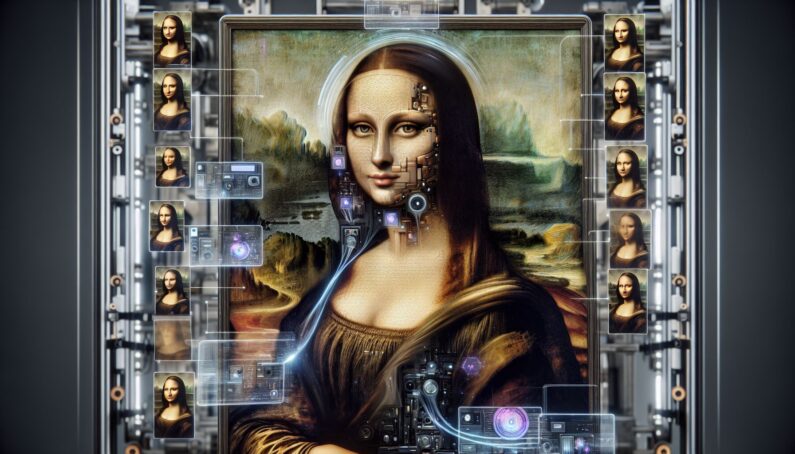
Hello, fellow tech enthusiasts! If you’ve ever played around with Midjourney, DALL-E, or Stable Diffusion, you know we’re in a golden era of AI in the creative arts. Things are changing faster than a trending TikTok dance, and as someone who has dabbled in both the analog and digital worlds, I’m stoked to see where this is headed. Today, let’s talk about how AI is changing artistic expression. Spoiler alert: This is going to be juicy.
The Picasso in Code
First, let’s talk about what’s happening right now. AI isn’t just drawing cutesy digital doodles or spammy meme faces. We’re talking legit Picasso-caliber work here. Take, for instance, a project I stumbled upon where AI algorithms worked with human artists to recreate Van Gogh’s lost paintings. The results were eerily accurate, like uncanny valley for paint and brush. It had me wondering if Van Gogh were around today, would he have traded in his palette for Python?
The Algorithms Behind the Curtain
Now, let’s get into the nuts and bolts. Most AI art generation tools use a machine learning process called Generative Adversarial Networks (GANs). Without turning this into a dry, code-heavy lecture, let’s just say that GANs are like the Lennon and McCartney of AI. One network creates stuff and the other gives it a thumbs up or down. Over time, they build something that could genuinely blow someone’s mind in an art gallery.
The Human Element
But don’t forget, there’s still a human factor here. While AI acts as a brush, the artist is the master painter. Even the snazziest algorithms need a guiding hand to direct them, to provide that spark of humanity. I’ve tried my own hand at coaxing AI to produce art, and it’s not just a walk in the digital park. It requires a sharp eye and the patience of a cat at a mouse hole.
The Implications: Who Owns the Art?
Let’s move to the meatier, more philosophical bit. Who gets credit for these AI-generated masterpieces? Is it the coder, the machine, or perhaps the one who came up with the idea? This debate loops endlessly without a satisfactory answer, yet it’s something we need to figure out as AI continues its creative takeover.
Legal Labyrinths
The legal world is scrambling to catch up, and honestly, it’s hilarious to watch. Lawsuits have popped up like viral TikToks as artists argue against AI creators using their styles without credit. And then there’s copyright. Who owns AI art? Is it the creator of the algorithm, the user, or can we attribute it to Skynet? At this rate, I half-expect AI to hire its own lawyer bots to fight it out.
What’s Coming Next: Smarter, Better, Faster
Alright, let’s peek into the crystal ball. With rapid advancements, the line between AI and human-generated art is blurring faster than ever. Some savvy startups are already offering ‘collaborative art experiences,’ planning for a world where artists and AI create in perfect harmony. Imagine walking into an art show five years from now, and not being able to tell which pieces had a little digital help. Exciting, right?
Breaking Barriers
On the brighter side, AI opens doors to people who couldn’t traditionally access the arts. Think disabled artists or those who can’t afford materials but have a burning passion to create. This could make the art world more diverse and inclusive than ever before. Who knows? The next Shakespeare or Picasso might just be a kid with an iPad and access to cutting-edge AI tools.
Orchestrating the Symphony
AI isn’t stopping at painting. Its musical work is equally impressive. Ever heard of AIVA? This AI composer creates symphonic tracks that could easily mess with your emotions like a blockbuster film score. During a recent hackathon, I saw a team using AI to generate unique musical scores perfectly tailored to an indie video game’s mood. Seriously, it was like magic watching spreadsheets turn into symphonies.
Wrapping Up: The Future is Now
In conclusion, folks, AI isn’t just an assistant for artists but an emerging partner, offering new ways to be creative and explore art. While challenges persist (legally, ethically, and in mixing human intuition with computerized logic), the canvas is wide open. It’s a thrilling time to be a creative, even if your muse has a motherboard.
Until next time, keep imagining, creating, and debating. The Mona Lisa wasn’t painted in a day, and who knows? Your next masterpiece might just be a collaboration with our silicon-based friends. Keep experimenting, and may your code always compile without errors.
Cheers!