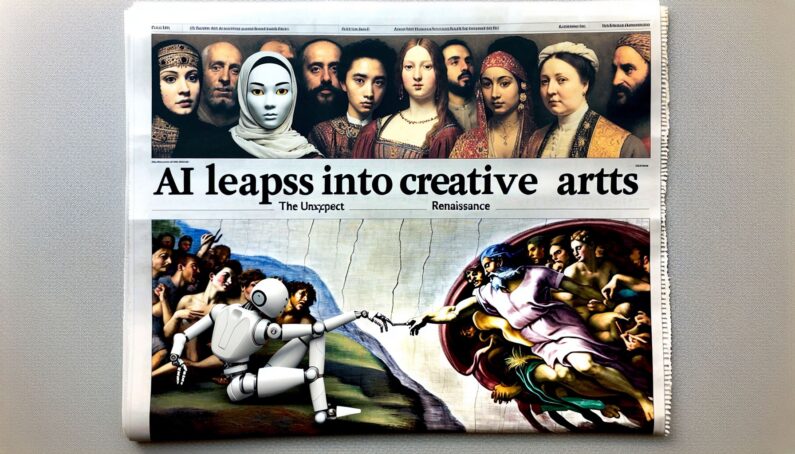
Hey there, tech enthusiasts! Today, I’m giddy, and not just because there’s a fresh pot of coffee on my desk. Nope, what’s got me buzzing is a fascinating development in the world of Artificial Intelligence, particularly how it’s tiptoeing its way into the arts. Consider me your tech spelunker, diving deep into the caverns of AI’s creative prowess. Let’s illuminate the twists and turns of this exciting evolution.
The Artistry of Algorithms
From Paintbrush to Processor
Remember the days when art was all about getting paint under your fingernails? Well, welcome to the future, where artists wield algorithms instead of brushes. Just this week, I stumbled across a startup, “NeuBrush,” that’s been making waves. They’ve harnessed AI to generate incredible pieces of art that genuinely make you scratch your head and go, “Wait, a machine did THAT?”
While we’ve seen AI dabble before with apps like Prisma and DeepArt giving users a taste of computer-generated artistry, NeuBrush takes it one step further. It tailors styles to suit individual preferences, turning your vague whim into something you’d proudly hang over the mantelpiece. Think of it as the Picasso of the digital age, minus the funky mustache.
Music for the Machine Age
And it’s not just visual art. There’s a symphony of silicon composing melodies that hit right in the feels. Platforms like AIVA (Artificial Intelligence Virtual Artist) are crafting compositions that would make even Beethoven do a double take. AIVA’s music is so good that film and game producers are commissioning it regularly for soundtracks. It makes you wonder about the possible Oscar-worthy AI composers of tomorrow.
Now, before you start thinking AI might put all musicians out of a job, here’s a silver lining: it’s doing quite the opposite. Musicians are working with AI for that extra spark, using these technologies as creative co-pilots rather than competitors.
The Implications of AI Creativity
Collaborators, Not Replacers
Let’s address the robotic elephant in the room: Does AI spell doom for traditional artists, or will it coexist as a creative companion? What I see happening, at least for now, is a harmonious fusion. Sure, AI can replicate and innovate, but the human touch, the raw emotion, those are things no code can quite capture (yet).
From my conversations with artists working alongside AI, I hear a lot about the joy of discovery. They love how the AI takes their ideas down uncharted paths, suggesting possibilities they might’ve never considered. It’s a creative dance, if you will, where each party brings something unique to the table.
An Economic Renaissance
On another exciting note, AI-driven creativity is democratizing access to art. Imagine someone with killer ideas but lacking artistic skill. Enter AI tools, which are empowering creators to manifest concepts despite technical limitations. This could very well fuel a new wave of digital entrepreneurs, birthing a sub-economy within the creative industry.
Challenges and Ethical Quandaries
Ownership Dilemma
But it’s not all starry skies on the AI horizon. There’s a murmur around the thorny issue of ownership. If an AI creates a blockbuster piece of music or a digital masterpiece, who gets the credit? The developer? The user guiding it? Or the AI itself (hey, stranger things have happened!)?
Laws and frameworks around intellectual property are still catching up. Many argue for a hybrid model, recognizing both the human and the algorithm. And let’s not forget that ensuring originality of AI-generated art poses its own ethical puzzle. After all, we don’t want a future awash with rehashed creativity.
AI Bias in the Arts
Then there’s the whole matter of bias. Yep, even digital Da Vincis aren’t immune. AI often reflects the biases of the data it learns from, meaning we might inadvertently perpetuate stereotypes in our art. The challenge? Training AI on diverse datasets that represent different cultures and voices. Simplistic as it sounds, getting this right matters if we want AI art to truly represent our world’s rich variety.
Where Do We Go from Here?
The Uplifting Symphony of Human and Machine
Peering through my crystal ball, I foresee a future where AI and artists work together even more closely. Think of it as a fusion orchestra where AI crafts the complex harmonies, while human touch provides the detailed solos.
With giants like OpenAI, Google, and Adobe pouring vast resources into refining these creative tools, we’re only at the dawn of what’s possible. AI might unlock avenues of self-expression we haven’t even dreamed up yet.
The Call to Action
If you’re a creative soul or simply an aficionado of tech, there’s no better time to dive in and experiment with AI tools. Who knows? You might stumble upon the next great masterpiece the world didn’t know it needed. Plus, there’s never too many ways to have fun, and if fun happens to disrupt the art scene in all the right ways, why not?
So, dear reader, keep those creative juices flowing and embrace this convergence of human imagination and machine intelligence. After all, this techno-utopian dreamscape is only just beginning. Isn’t it thrilling to be on this ride together? Let’s see what we can co-create, shall we?
Until next time, keep exploring, keep creating, and remember: the best things happen when humans and robots put their heads (and hearts) together!