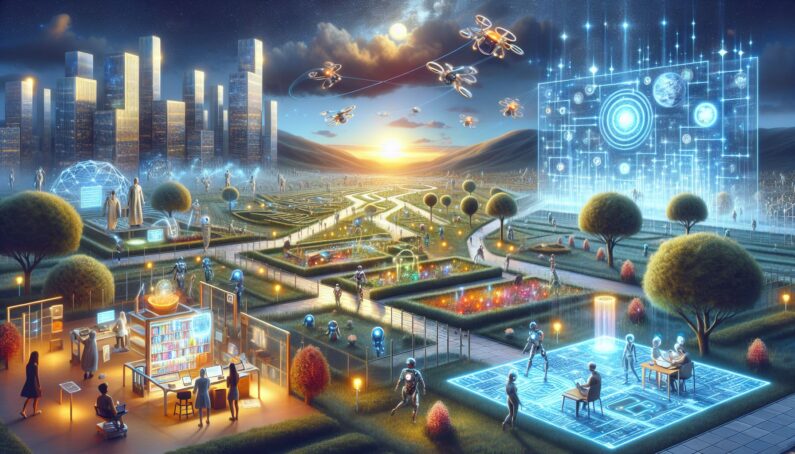
As I was sipping my morning coffee today, pondering the existential questions of life (like why does my toaster hate me?), I stumbled across something that got my tech-loving brain fired up: a breakthrough in Artificial Intelligence (AI) that promises to change the world as we know it. This daily dose of digital enlightenment, served with a side of skepticism, got me thinking: are we heading for a techno-utopian future or the next season of Black Mirror? Spoiler alert: it’s looking pretty utopian from where I stand.
AI is Not Just for Nerds Anymore
First things first, folks. Let’s kill the myth that AI is just a nerdy blip on the radar of sci-fi-loving techies with too much time on their hands. It’s very much alive, and it’s working its way into everything we do. From the apps on our phones to the algorithms determining our shopping habits. The latest AI trend? Mixing creativity with computation. Think AI-powered novels, songs, and even artworks. Yes, Picasso 2.0 might just be your next digital assistant.
You know AI has really made it when it’s creating art so moving it makes even the most hardened critics pause. AI-generated music isn’t just background noise. It’s coming at us like the Beethoven of the 21st century, except without the powdered wigs. Platforms like OpenAI have experimented with music and visual arts through algorithms like MuseNet and DALL-E, opening the floodgates for a wave of AI-infused creativity.
The Commerce Conundrum: AI as the New Business Partner
While many of us are drooling over tech’s artistic capabilities (myself included), there’s a very real application of AI brewing in the business world. Companies today are drowning in data, using AI to sift through the information overload. Whether it’s optimizing supply chains, planning sales strategies, or personalizing customer experiences, AI is now the business partner you didn’t know you needed.
The key player in this revolution? Machine Learning (ML), baby. This subset of AI is all about teaching computers to learn from past data, a bit like training a puppy, except AI doesn’t chew up your shoes. ML algorithms analyze massive datasets quicker than you can say “Silicon Valley,” letting companies make data-driven decisions with crazy speed and accuracy.
The Rise of AI Startups
In case you’re wondering, no, this revolution isn’t just for industry giants. The startup world is bubbling with AI enthusiasts who are mixing creativity with commerce. Startups like Jasper.ai are using AI to generate human-like content in a way that would make any writer question their job security. And while we’re at it, let’s not forget robotics companies integrating AI to create service robots for hospitality and healthcare. Proof that AI’s promise extends beyond the white walls of traditional tech.
The Ethical Quagmire: AI’s Very Own Soap Opera
Of course, no story is complete without a juicy conflict, right? Enter the ethical debates surrounding AI. Should we be worried about privacy? Is AI going to replace jobs faster than a pizzeria serving slices at a lunchtime rush? These questions are as important as they are provocative.
AI and privacy share a complicated history, kind of like a soap opera with as many plot twists as a daytime drama. Technological advances are great, but with great power comes great responsibility, and in AI’s case, a flood of data protection concerns. Making sure AI follows current privacy laws and ethical standards isn’t just a side job for legal teams. It’s a full-blown undertaking requiring international cooperation.
The Job Evolution: Not Extinction
Now, before you call your career counselor in a panic, let’s clarify one thing: AI isn’t here to steal your job. It’s here to transform it. Much like the industrial revolutions of yesteryear, this AI renaissance is about changing human roles, not wiping them out. Besides, do you think an AI can replace your unique flair for sarcasm during Monday meetings? Highly unlikely.
AI will take over mundane tasks, allowing humans to focus on more important and creative work. It’s about as threatening as having a robot vacuum clean your house. Satisfying, sure, but not particularly terrifying.
Cognitive Collaboration: Humans and AI Together
Now, let’s talk synergy. The chemistry between humans and AI is sparking some of the most exciting discussions in tech circles. Imagine combining the creative genius of humans with AI’s ability to handle boring tasks. We’re talking about a collaborative dream team.
This human-AI partnership is why I’m excited about AI’s potential to improve decision-making, boost efficiency, and discover new insights in fields like medicine, where research is increasingly relying on AI to sift through genetic data to create individualized treatments. Remember, AI might handle the data, but it’s us humans who decide how to use it responsibly.
Looking Ahead: The Possibilities are Limitless
So, what’s next, you ask? Picture this: smart cities where AI manages everything from traffic flow to energy efficiency. Interactive entertainment powered by the combined might of human and machine creativity. And the best part? Lifespans extending as we tackle health challenges that currently baffle medical experts.
Call me optimistic, but I see a future where AI isn’t a simple tool but a collaborative force working with us toward a brighter, more informed, and creative world. Sure, there are challenges, but isn’t that the beauty of every great technological journey? As we hover on the edge of this new era, it’s clear that AI’s story is far from written. Here’s to a future built on human creativity and powered by AI intelligence.
And to all my fellow tech enthusiasts out there: let’s raise a toast, not just to the promise of technological progress, but to the incredible journey we’re on, one byte at a time.